

If you run retail media at a national retailer, your online network is probably working.
Onsite search, sponsored products, display, a rate card, a team, quarterly revenue your board can see.
Then a CPG advertiser asks what the in-store equivalent looks like. And the answer gets vague.
That gap is now the single biggest constraint on retail media revenue in the UK. Not demand. Not appetite. Infrastructure.
Why in-store keeps getting deferred
It is rarely a strategic decision. It is a sequencing problem.
Online retail media was built on systems you already owned, the site, the data, the ad server. In-store is not like that. It means hardware across hundreds of locations, a CMS that store teams do not have to operate, an audience layer that did not previously exist, and a commercial model finance has to underwrite before a single pound of revenue arrives.
So it becomes a phase two. And phase two slips.
Meanwhile the advertiser has a budget with a deadline. If your estate cannot take it, it goes to a network that can.
Why most in-store media fails
The pattern is consistent, and it has almost nothing to do with screen quality.
Screens operate in silos. There is no real audience targeting. Content gets treated like digital print, cardboard on a screen. The inventory is difficult for brands and agencies to buy. There is no clear link to revenue or ROI. And the estate carries operational complexity nobody internally wants to own.
The result is valuable media inventory going unsold and revenue left on the table.
This is why we talk about Retail Media 4.0 rather than digital signage with a commercial ambition attached. It is a different category: a new media business inside your stores.
What your advertisers are actually asking for
Three things, consistently. First-party audience targeting, not a footfall number. One place to buy, rather than eleven store formats with different screen types and no unified inventory view. And measurable performance, reported the way every other channel reports.
None of that is exotic. All of it is infrastructure.
What a working in-store layer looks like
From the networks IUF has deployed, the version that survives contact with a media plan has five parts.
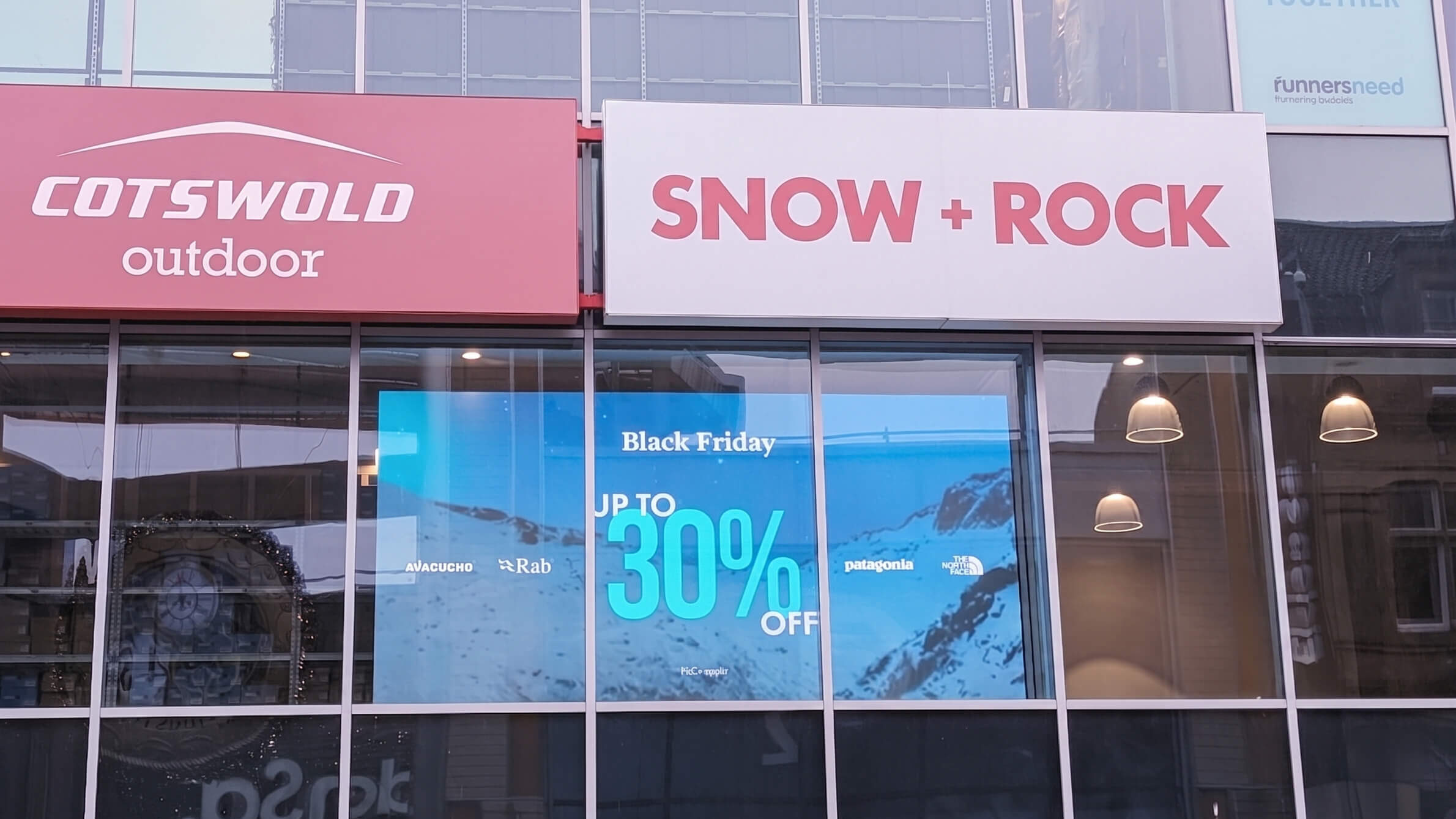
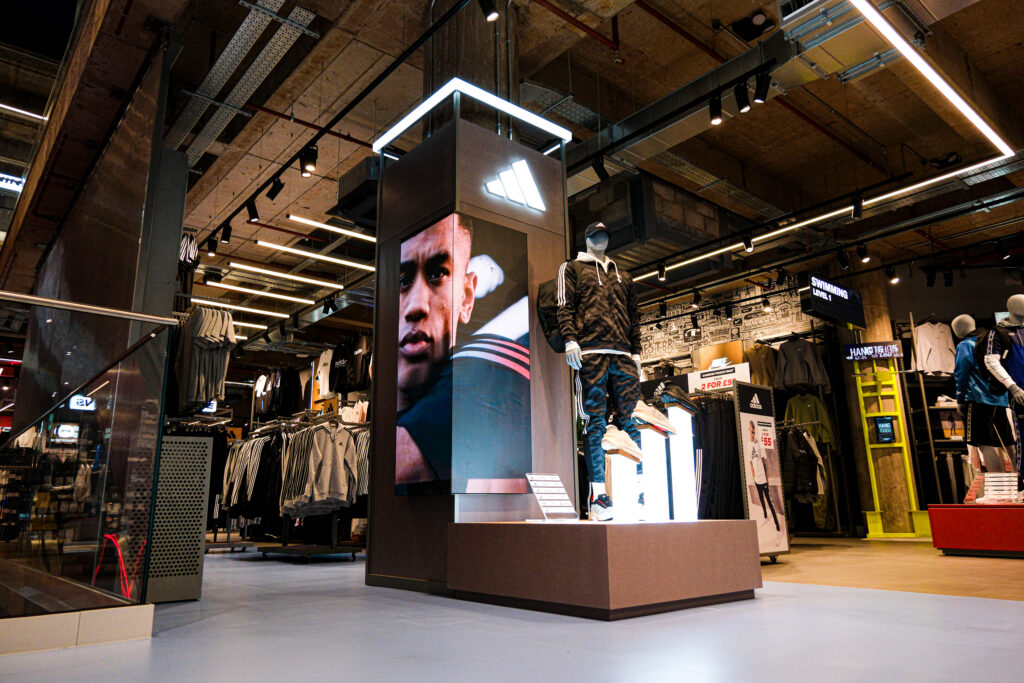
Hardware specified for the position it occupies, not the budget line it sits on. On the Cotswolds Outdoor network across 29 UK sites, the format ecosystem was built for the floor: 15.6 inch touchscreen tablets for self-serve product discovery at fixture level, 37 inch stretch displays embedded into shelving, 43 inch double-sided totems along store flow paths, 65 and 75 inch large-format screens for brand storytelling, front-of-store LEDs at the point of entry, and a 5,000 x 3,000mm LED above the food court at Bluewater. 149 displays in total, each format chosen for the job that position had to do.
A CMS and playback layer built for media, not just content. Cotswolds Outdoor runs enterprise scheduling and distribution software across the full network, with IUF Retail Media players delivering consistent playback on every display and licence provisioning managed centrally by IUF.
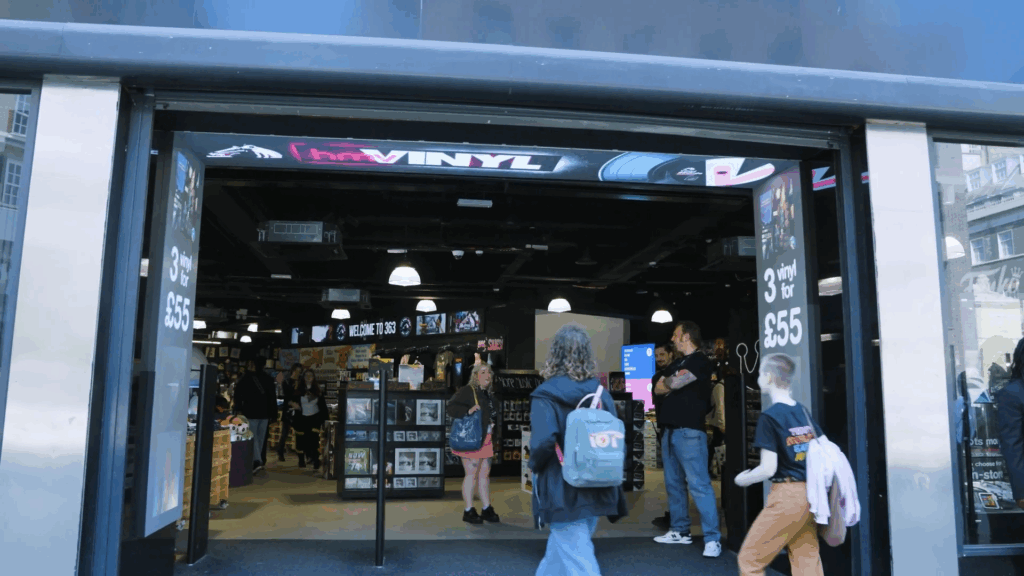
One platform across a mixed estate. HMV runs 65 inch high-brightness totems across 75 stores plus bespoke LED flagships at Oxford Street, Newcastle and Westfield, all managed from a single CMS. That estate has grown from 30 stores at launch in 2023 to 75 today, a 150% increase, because the commercial case kept proving itself.
Measurable performance. Real-time campaign control, audience targeting, pricing and inventory management, and reporting from one console, so an advertiser can plan against your estate and report on what it delivered. Across the Cotswolds Outdoor estate, screened stores recorded a 13% sales uplift following network activation.
Demand generation from day one. Screens do not sell themselves. IUF connects retail media inventory to agency buyers and brand partners directly, so networks are commercially active from launch, not six months after it.
Ownership is not negotiable, and it should not have to be
Enterprise retailers want the platform and the content in their own name. That is the right instinct, and it is how we build. The retailer retains full control of content creation and scheduling. IUF owns the infrastructure: hardware, players, licensing and network reliability. No grey area, no duplication.
IUF has been building and managing in-store retail media networks since 2008, founder-led, operating across 30+ countries, with 32,000 connected devices and 500+ projects delivered.
The retailers who own in-store ad budgets in 2030 are the ones building the infrastructure in 2026.
If in-store is sitting in your phase two, we can show you what phase one looked like for retailers who have already done it.
