

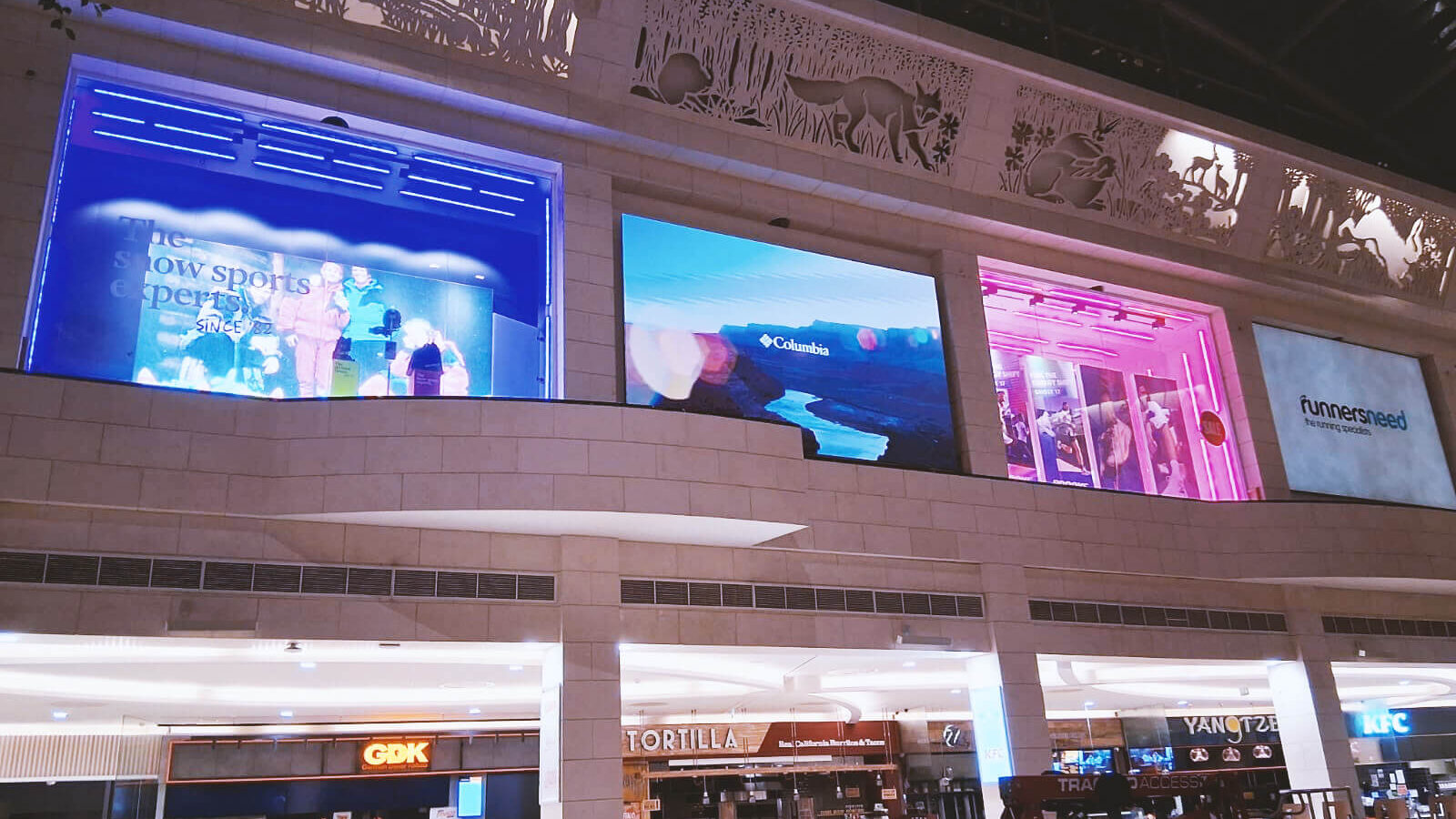
If you operate screens across a stadium, forecourt, transport hub, quick-service restaurant or leisure venue, you already have something advertisers value.
People. Thousands of them. Every day.
So why do so many high-footfall estates struggle to attract advertising budgets?
The answer usually isn’t audience size.
It’s that agencies can’t buy the inventory with the same confidence they buy established Digital Out of Home (DOOH) networks.
The gap between having screens and having a commercially viable media network is often much smaller than operators think—but it requires the right foundations.
High footfall doesn’t automatically create media value
Many organisations assume that because their venues attract large audiences, advertisers will naturally follow.
Unfortunately, that’s not how media planning works.
Agencies don’t buy locations.
They buy campaigns.
That means they need confidence that inventory can be booked, delivered, measured and reported consistently across an entire estate.
Without those fundamentals, even premium locations can struggle to attract repeat investment.
A single control platform is the starting point
One of the biggest barriers to commercialisation is fragmentation.
Many estates have grown over time, often using different CMS platforms, hardware providers or regional systems. Operationally that might work, but commercially it creates unnecessary complexity.
If campaigns have to be managed differently across multiple systems, they become harder to plan, deliver and report.
Creating a single control layer across the estate gives operators one source of truth for scheduling, monitoring and campaign management, while making life much easier for advertisers and agencies.
Audience data matters more than footfall
“Over one million visitors a month” sounds impressive.
For a media buyer, it isn’t enough.
Brands increasingly want to understand who is seeing a campaign, when they’re seeing it and how that audience aligns with their objectives.
The more confidently an operator can describe its audience, rather than simply its visitor numbers, the stronger its commercial proposition becomes.
Commercial readiness goes beyond technology
Even with the right infrastructure, agencies need a straightforward route to market.
That means clear inventory, transparent pricing, reliable reporting and a defined commercial process.
Whether those capabilities sit with an internal media team or are supported through specialist partners, the buying experience needs to be simple.
The easier it is to plan and activate campaigns, the more attractive an estate becomes.
Automation is becoming an expectation
Programmatic DOOH continues to grow because it allows campaigns to be bought, adjusted and measured more efficiently.
That doesn’t mean every estate needs to become fully programmatic overnight.
It does mean operators should consider whether the technology they invest in today will support the way media is increasingly bought tomorrow.
Building with that future in mind avoids expensive reinvestment later.
Think beyond the screens
The most successful DOOH networks don’t succeed because they have the biggest displays.
They succeed because advertisers trust the infrastructure behind them.
- Reliable content delivery.
- Consistent reporting.
- Well-managed inventory.
- Responsive support.
Those operational foundations are largely invisible to the customer, but they’re exactly what gives agencies confidence to invest.
The opportunity
Across the UK, there are thousands of screens in high-footfall environments that already have the potential to generate commercial value.
The challenge isn’t proving those audiences exist.
It’s making the estate easy to buy.
For organisations looking to unlock new revenue streams, that’s where the real opportunity lies.
At IUF, we help operators build the infrastructure, operational resilience and commercial foundations that enable screen estates to evolve into scalable DOOH and retail media networks.
Because agencies aren’t looking for more screens.
They’re looking for media environments they can trust.
