


In short:
Gym advertising is a powerful commerce media channel that uses digital screens and the gym app to show relevant brands to gym members during their visit. It works because gym visits are long, frequent and made by a known audience. For gym operators, being able to offer brands a way to advertise within the gym space opens up a new revenue stream.
What if one of your gym’s most valuable assets is the audience walking through its doors?
In 2025, UK gyms and health clubs recorded 679 million visits, up 10% on the year before with national membership reaching a record 12.2 million people (ukactive, UK Health & Fitness Market Report 2026). That’s a large, loyal and motivated audience that advertisers would love to reach.
What is gym advertising?
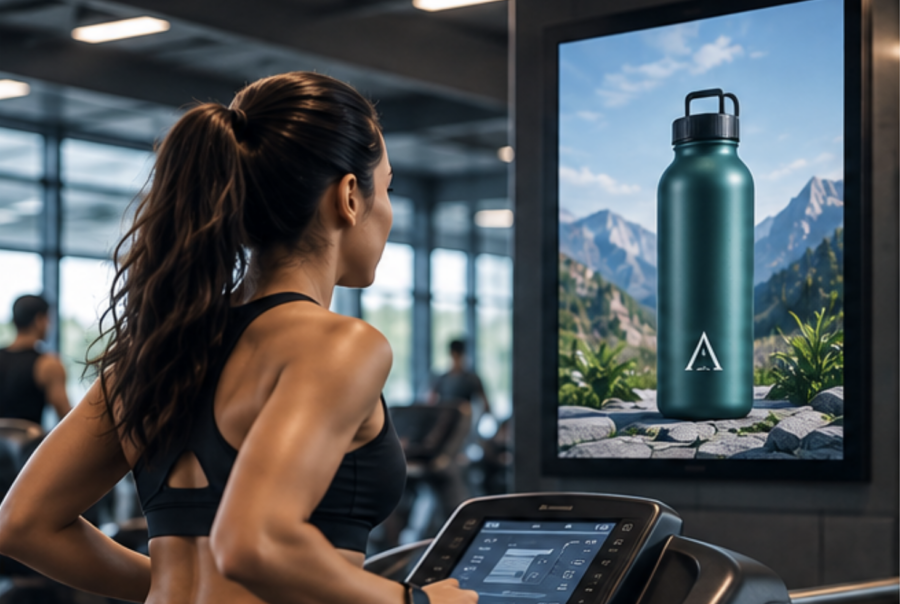
Gym advertising is place-based digital out-of-home (DOOH) media inside fitness clubs. It covers screens in reception, on the gym floor, in changing rooms and in cafés, often linked to the member app. When it uses the gym’s own first-party member data to plan and measure campaigns, it works much like retail media, and is increasingly described as commerce media.
Why is the gym such a strong space for advertising?
1. Members stay for over an hour
A grocery trip is short. Most US shoppers spend under 45 minutes per trip (Drive Research). The average PureGym visit lasts 66 minutes (PureGym), and US value gyms averaged 74 minutes in early 2025 (Placer.ai).
That time includes natural pauses: between sets, walking between zones, recovering at the end. A well-placed screen in the gym reception, between zones, at the café or rest area gets noticed.
2. Members come back, week after week
Fitness runs on routine. Around three-quarters of The Gym Group’s Gen Z members train at least twice a week (Express & Star / PA). Brands reach the same people again and again, building the kind of familiarity a one-off shopping trip can’t.
3. A younger audience that’s hard to reach elsewhere
In the US, 18 to 24-year-olds have the highest gym membership rate of any age group, at 35.5% (Health & Fitness Association). In the UK, Gen Z made up about 44% of The Gym Group’s members last year.
Younger people are hard to reach through TV or the weekly shop. In the gym, they’re present and focused on goals that are especially relevant to nutrition, sportswear, wellness and tech brands.

4. Gyms know their audience

Most gyms know who’s in the building. Members check in with apps, key fobs or QR codes, so operators can see attendance patterns, peak times and how often people visit.
Shared with advertisers as aggregated, anonymised insight, that data helps brands plan campaigns around when their audience is actually there, and helps operators report on what was delivered. That’s what makes gym media closer to retail media than to a DOOH platform.
How does gym advertising earn money for operators?
Suitable areas of the gym become media space that brands pay to use, without asking members to pay more. Natural advertisers include sports nutrition, hydration, sportswear, wearables, wellness and recovery brands, as well as local businesses such as physios and cafés.
Industry standards are catching up too. IAB and IAB Europe published their In-Store Retail Media Definitions and Measurement Standards in December 2024. They’re written for stores, but the principles of clear zones and consistent measurement are what brands will expect from gyms as well. Operators have a lot to gain from operating commerce media within their premises provided they can operate at a standard that brands and agencies expect and can deliver results.
What do operators need to get right?
- Protect the member experience. Mix useful content, such as class times, how busy the gym is and training tips, with advertising, and cap how often ads appear.
- Place screens where members pause. Reception, cafés, rest areas and changing rooms work better than mid-workout sight lines.
- Connect screens to the app. QR codes and check-in offers turn attention into action and offer brands an activation opportunity that extends beyond the gym visit.
- Measure from day one. Proof of play, attendance, responses and sales give brands a reason to come back.
- Use data responsibly. Share aggregated insight, never individual records, and be open with members about how data is used.
The Opportunity Is Already in the Building
Gyms already have what advertisers want: long visits, loyal members, a younger audience and real data about who’s there. The next step is turning those assets into media that members are happy to see and brands keep buying.
At IUF, we help operators make their spaces perform, from screens and content to the platforms and data that show what a campaign achieved.
Frequently asked questions
1. What is gym advertising?
Gym advertising is digital out-of-home media placed inside fitness clubs, such as screens in reception, on the gym floor, in changing rooms and in cafés. It lets brands reach members during their visit. Also described as commerce media, in-gym advertising unlocks new revenues for gyms and gives brands an effective way to reach target audiences.
2. Is gym advertising a form of retail media?
Strictly, gym advertising is place-based DOOH. It behaves like retail media (or commerce media) when the operator uses its own member and check-in data to plan, target and measure campaigns. That’s why it’s increasingly grouped under commerce media.
3. How long do people spend in the gym?
The average PureGym visit lasts 66 minutes, and US value gyms averaged 74 minutes per visit in early 2025, according to Placer.ai. Most grocery trips last under 45 minutes.
4. Can gyms use member data for advertising?
Yes, if they follow data protection law. In the UK that means handling personal data lawfully, fairly and transparently. Advertisers should receive aggregated, anonymised insight, not individual member records.
5. Which brands advertise in gyms?
The best fits help members reach their goals: sports nutrition, hydration, sportswear, wearables, recovery and wellness brands, plus local services such as physios and cafés.
