


Ask ten digital signage providers what “fully managed” means and you’ll get ten different answers. Some mean hardware warranty. Some mean a helpdesk number. Some mean genuine end-to-end ownership of your estate. The difference matters, because buyers who don’t know which one they’re getting usually find out at the worst possible moment: when screens go dark during peak trading and no one picks up the phone.
Why “Managed” Has Become a Confusing Word
The demand for managed digital signage has grown significantly as estates have scaled. A retailer running screens across 50 locations, or a venue managing displays across concourse, bowl, and fascia, cannot realistically manage that infrastructure in-house. Providers responded to that demand by packaging their offerings under “managed services”, but the label has stretched to cover almost anything.
At one end, a managed service means someone will send an engineer if a screen completely fails. At the other, it means full-time visibility across every device, proactive fault detection before anything goes down, scheduled maintenance, content management, and a commercial reporting layer. Both get called “managed.” Only one of them actually keeps your estate running.

What a Managed Service Should Cover, and Usually Doesn’t
The gap between what buyers expect and what they receive tends to show up in four areas.
Monitoring.
Real-time visibility across every screen and device in the estate is the foundation of any managed service. Not a weekly email summary, live status, with automated alerts when something drops offline. Without this, the service is reactive by design. You call them when something breaks. That is not managed, it is just support.
Proactive fault detection.
Monitoring only has value if someone acts on it before you do. A managed service should detect and escalate issues without waiting for a fault report from the client. This requires both the monitoring infrastructure and the operational process to act on it, most providers have the first and not the second.
Planned Preventative Maintenance.
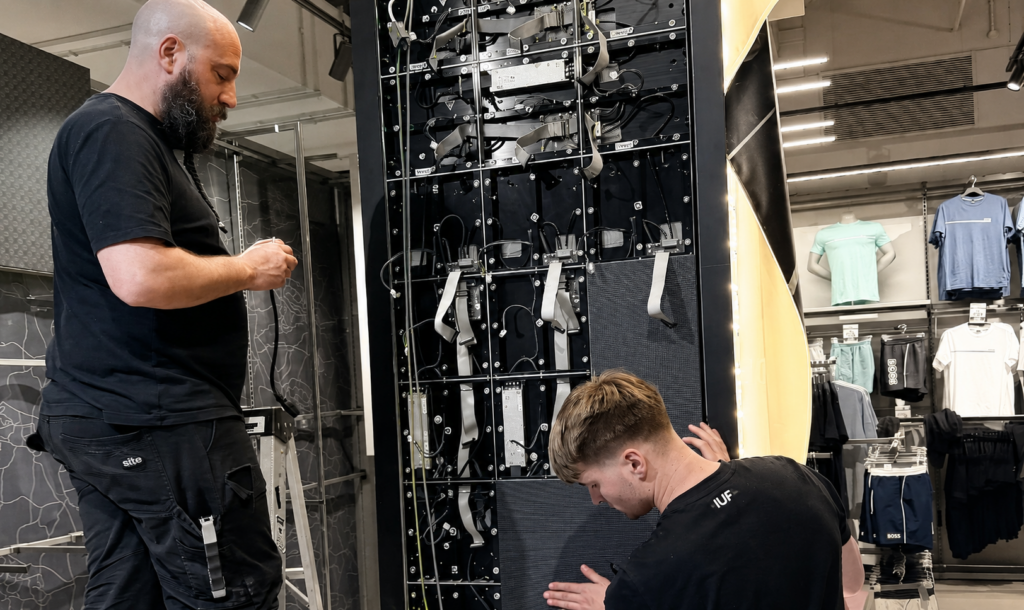
Hardware degrades in ways that aren’t visible on a dashboard. Fans collect dust. Mounts shift. Connections loosen. PPM visits, at least annually, catch physical deterioration before it becomes failure. This should be written into the agreement from the start, not quoted separately when something goes wrong.
Defined SLA tiers.
“We aim to respond within 24 hours” is not a service level agreement. Response time commitments need to be written, tiered by fault severity, and enforceable. A screen failing at a till point in a busy store on a Saturday has a different commercial impact than a secondary display going offline in a quiet corridor, the SLA should reflect that.
What Good Looks Like Before You Sign
Before committing to any managed service, get written answers to these questions. If a provider hesitates on any of them, that’s useful information.
What does your monitoring platform cover, and can I access it directly? Is PPM included in the base agreement or costed separately? What is your guaranteed response time by fault severity? Who owns content scheduling, and what happens when it goes stale? What happens outside business hours?
The answers will tell you quickly whether you are buying a managed service or a support contract with better marketing.
This is the standard we hold ourselves to at IUF. Our managed service is built around Eversight, our own centralised monitoring platform, with real-time dashboards, proactive fault detection, and PPM included across Bronze, Silver, and Gold SLA tiers.
If you are reviewing your current managed service agreement, or specifying one for the first time, we are happy to walk you through what ours covers.
